

Choosing a truck starts with the job
Four questions to discuss before choosing a model.
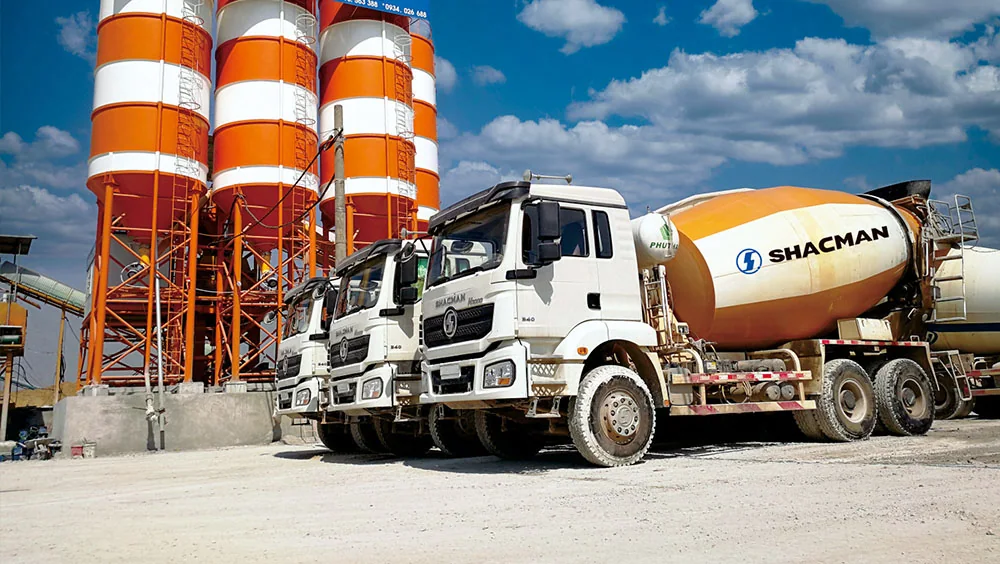
What makes a truck?
Tap a number in the photograph, or choose a part above. Its explanation appears alongside.
Cab
The driver’s working space. Trip length and the working pattern help define the cab requirements.
Where and for how long will the driver work?
Chassis
The supporting structure of the truck. It carries the working body and mechanical systems. Part of the chassis is obscured in this photograph.
What load, route and working pattern are expected?
Working body
A rotating concrete drum in this example. Another job may need a different body: box, refrigerated, tank or tipper.
What must the vehicle do each day?
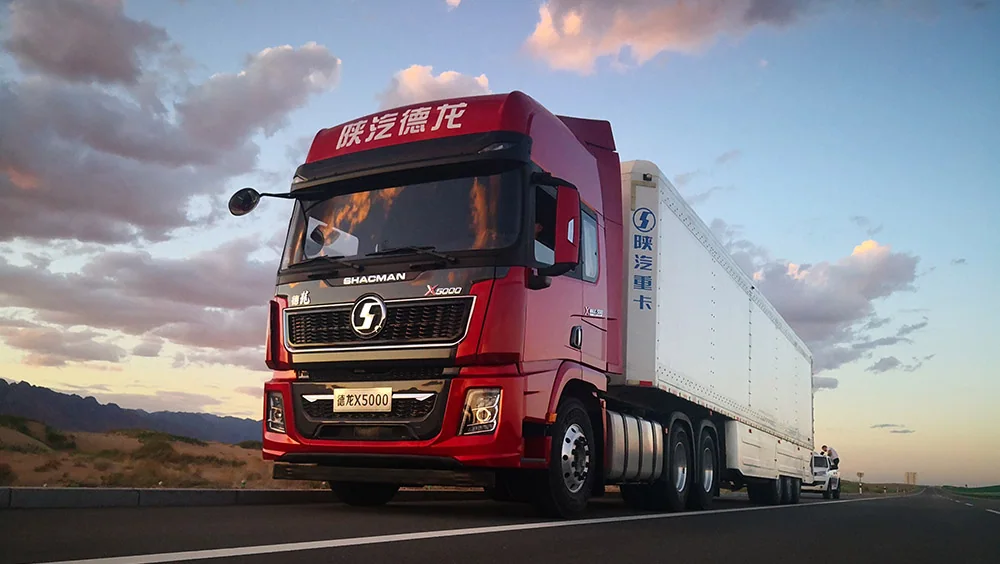
Tractor and trailer
Here the cargo is in a semitrailer coupled to the tractor. The tractor and trailer must be considered together for the load and route.
Which semitrailer will you use, and on what route?
Annotations explain the arrangement. This is not a technical drawing or confirmation of an exact configuration.
These are different measurements. Body volume alone does not establish the permitted load mass.
Describe the task first
Concrete, loose material and refrigerated goods need different bodies and equipment. Start with what the vehicle must do each day.
Consider load and route together
Volume and mass are different measurements. Describe the cargo, route, surface, stops and loading conditions. Engine power alone does not describe the complete vehicle.
A family is not an exact build
H3000 or X5000 can appear with different bodies, drive layouts and powertrains. Compare the specific model's information; do not combine the strongest figures from separate variants.
Prepare a short brief
A useful starting brief for Khvicha is the task, cargo, route and desired body. A known model code also helps. Availability and exact terms can then be confirmed in a specific offer.
Sources and further information
A good question is a good beginning.
Discuss your actual job with Khvicha. Or keep exploring the articles.